season-guide
Soft Summer vs Cool Summer: Palettes, Neutrals, and How to Wear Them
Soft Summer vs Cool Summer: compare palettes through neutrals, makeup, metals, and outfit contrast, with practical ways to wear each.
Soft Summer and Cool Summer both lean cool, but they differ in how muted and contrasted their best colors are. Compare the same color family at similar depth before deciding which direction works better near your face.
So what actually separates them?
The confusion is real — and it’s built into the system. Both seasons share a cool undertone and a preference for muted tones. But they’re distinct in ways that matter practically, especially in what colors actually work on your skin.
Quick Answer: Soft Summer favors cool-to-cool-neutral, muted colors such as dusty rose, cool taupe, and blue-gray. Cool Summer has cleaner, crisper cool tones with slightly more contrast — think clear rose, icy lavender, slate blue. The key difference isn’t just saturation. Soft Summer puts muting first; True Summer puts coolness first, with depth and outfit contrast helping refine the choice.
Still deciding which one you are? Start with the True Summer vs Soft Summer self-test.
Why Soft Summer and Cool Summer Get Confused
Both seasons belong to the Summer family, which means they inherit the same foundational qualities: a cool undertone, a preference for soft rather than vivid colors, and a tendency to look washed out in warm, earthy tones.
The confusion usually happens because these two sit on opposite ends of the Summer spectrum. Soft Summer borders Autumn. Cool Summer borders Winter. Both are Summer — but they’re pulling in different directions.
The difference is subtle. Both palettes stay on the cool side: Soft Summer emphasizes muting, while True Summer emphasizes coolness. Understanding your Summer undertone in more depth helps clarify which end of the spectrum you’re on.
What Soft Summer Actually Looks Like
Soft Summer is the most muted Summer sub-season. Its proximity to Soft Autumn reflects shared softness, not a warm undertone.
In practice:
- Dusty rose, cool taupe, muted sage with a cool cast, and blue-gray offer useful cool-to-cool-neutral choices.
- Tonal combinations often support the palette, but low contrast between hair, eyes, and skin is not a requirement.
- Vivid or neon colors can dominate the muted effect; a small accent is easier to integrate than a large near-face area.
- Very icy or electric colors may feel too stark because of their lightness or intensity, not because Soft Summer is warm.
The defining quality is a softly grayed finish. Soft Autumn shares the muting but leans warm. Warm taupe can be used for comparison, not as a default Soft Summer color.
What Cool Summer Actually Looks Like
Cool Summer sits at the other end of the Summer spectrum, bordering Winter. It takes Summer’s cool undertone and adds slightly more contrast and clarity than Soft Summer.
In practice:
- Colors that work are distinctly cool — clear rose, icy pink, dusty lavender, soft navy, slate blue, cool gray. Less tolerance for warm-leaning neutrals than Soft Summer has.
- Contrast is medium. Cool Summer coloring often has a slightly clearer difference between features — think cooler skin tone with defined hair and eye color.
- Warm neutrals like camel, khaki, or warm beige look off — they conflict with the cool undertone in a visible way.
- Icy or cool-bright colors work better here than for Soft Summer — they don’t feel too stark.
The defining quality is clarity within coolness. The colors still aren’t vivid, but they’re cleaner and crisper than Soft Summer’s palette.
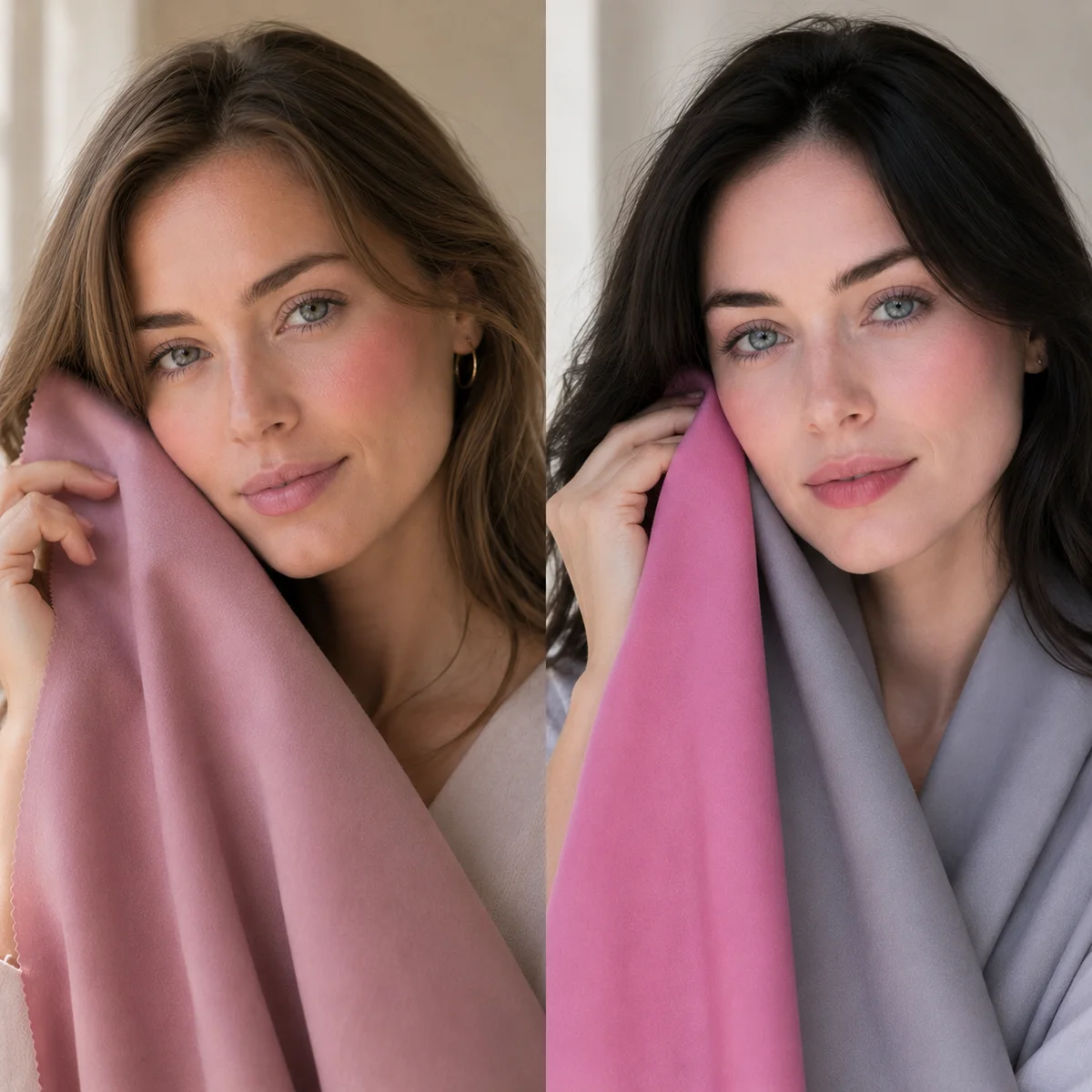
The Real Test: Muting Within the Cool Range
Start with a muted cool rose and a clearer cool rose at similar depth. Then try blue-gray beside a less-muted slate blue. If the softer versions consistently flatter your face, Soft Summer is a useful direction; if distinctly cool, less-grayed colors work better, consider True Summer.
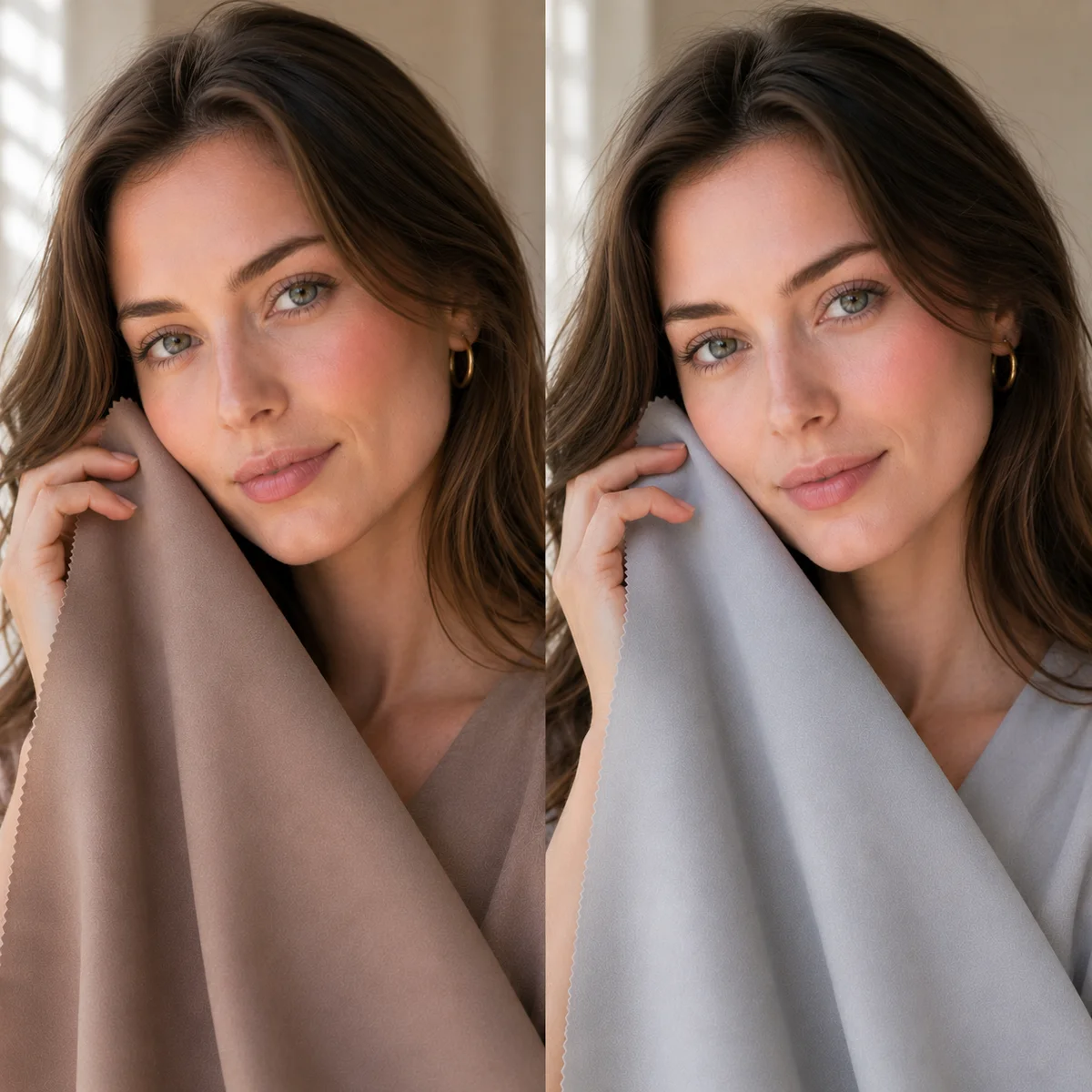
High-contrast clothing alone cannot separate the two. A warm taupe versus dove gray comparison changes temperature as well as hue, so it does not isolate their difference.
Veins and jewelry preferences are clues only, not reliable identifiers. The undertone guide offers further temperature comparisons.
Where People Go Wrong With This
Vein color cannot separate these seasons, and softness does not mean warmth.
Keep the useful draping comparison, but choose closer pairs:
- Dusty cool rose versus clearer cool rose.
- Muted blue-gray versus less-muted slate blue of similar depth.
- Cool taupe versus a less-grayed cool neutral.
Warm taupe can help test a warmer direction, but liking it does not establish Soft Summer. Compare the actual temperature, depth, and saturation rather than relying on a color name.
Practical Color Applications
Foundation
Match foundation to your actual skin depth and undertone, not to the season label. Compare neighboring shades at the jawline and neck in daylight; Soft Summer does not automatically require neutral foundation, and True Summer does not automatically require pink.
Clothing near the face
Soft Summer: dusty rose, cool taupe, blue-gray, and muted cool sage often create a soft, cohesive neckline.
True Summer: dove gray, cool off-white, lavender, slate blue, and cool rose tend to keep the cool direction clearer.
Makeup colors
Soft Summer: muted rose or mauve lips, cool taupe eyes, and softly blended rosy blush.
True Summer: cool rose, soft berry, cool gray or navy liner, and cool pink-rose blush. Adjust opacity and finish to the specific product and your skin or lip color.
FAQ
Can Soft Summer wear black?
Charcoal, soft navy, and dark cool gray often give a gentler result near the face. Black can still work in a smaller area or with a softer neckline.
Is Cool Summer the same as True Summer?
Yes. EverlySpark uses True Summer as the standard name and Cool Summer as its synonym.
Can I fall between Soft Summer and Cool Summer?
Yes. Dusty rose, soft blue-gray, and muted lavender offer useful overlap.
What if both warm and cool colors look good?
That alone does not identify Light Summer or a position between these palettes. Look at depth and saturation too. The photo-based personal color analysis samples colors from your photo and applies fixed rules; its result is a starting hypothesis.
Do the hair-color suggestions differ?
Muted ash brown and cool taupe often support Soft Summer. Cool brown, ash blonde, and softly defined cool highlights can suit True Summer. These are color suggestions, not requirements for natural hair color.
Can Soft Summer wear silver or gold?
Silver and white gold often fit both palettes. Finish, size, and placement matter when using warmer or mixed metals; liking gold does not make Soft Summer a warm palette.
Is Soft Summer the same as Muted Summer?
Some systems use that name. Here the defining direction is cool-to-cool-neutral and muted, not warm-muted.
What is the next step?
Explore the 12-season color palettes, or try the personal color analysis at everlyspark.com/analyze.
Final Thoughts
Soft Summer and True Summer both favor the cool side, but their emphasis differs: muted cool-neutral colors for Soft Summer, distinctly cool and moderately soft colors for True Summer. Dusty rose versus clearer cool rose is a useful starting comparison.
Explore the 12-season system or try the personal color analysis at everlyspark.com/analyze.
Correction (Oct 2026): corrected Soft Summer guidance to cool-to-cool-neutral, muted colors; warm taupe is a comparison color, not a default recommendation.