season-guide
Soft Summer Lipstick Colors
The best muted rose, soft mauve, and cool berry lipstick shades for Soft Summer coloring, plus which finishes and shades to avoid for a natural look.
Intro
Soft Summer palettes are known for their calm, slightly muted beauty. Instead of bright or high-contrast colors, this season looks best in tones that feel softly blended, cool, and gently greyed.
Quick Answer: Soft Summer lipstick works best in muted, cool-leaning shades — think dusty rose, soft mauve, and greyed berry — at a medium depth that avoids both very pale and very dark extremes. Bright coral, warm red, and high-contrast wine tend to fight this season’s naturally low-contrast coloring rather than complement it.
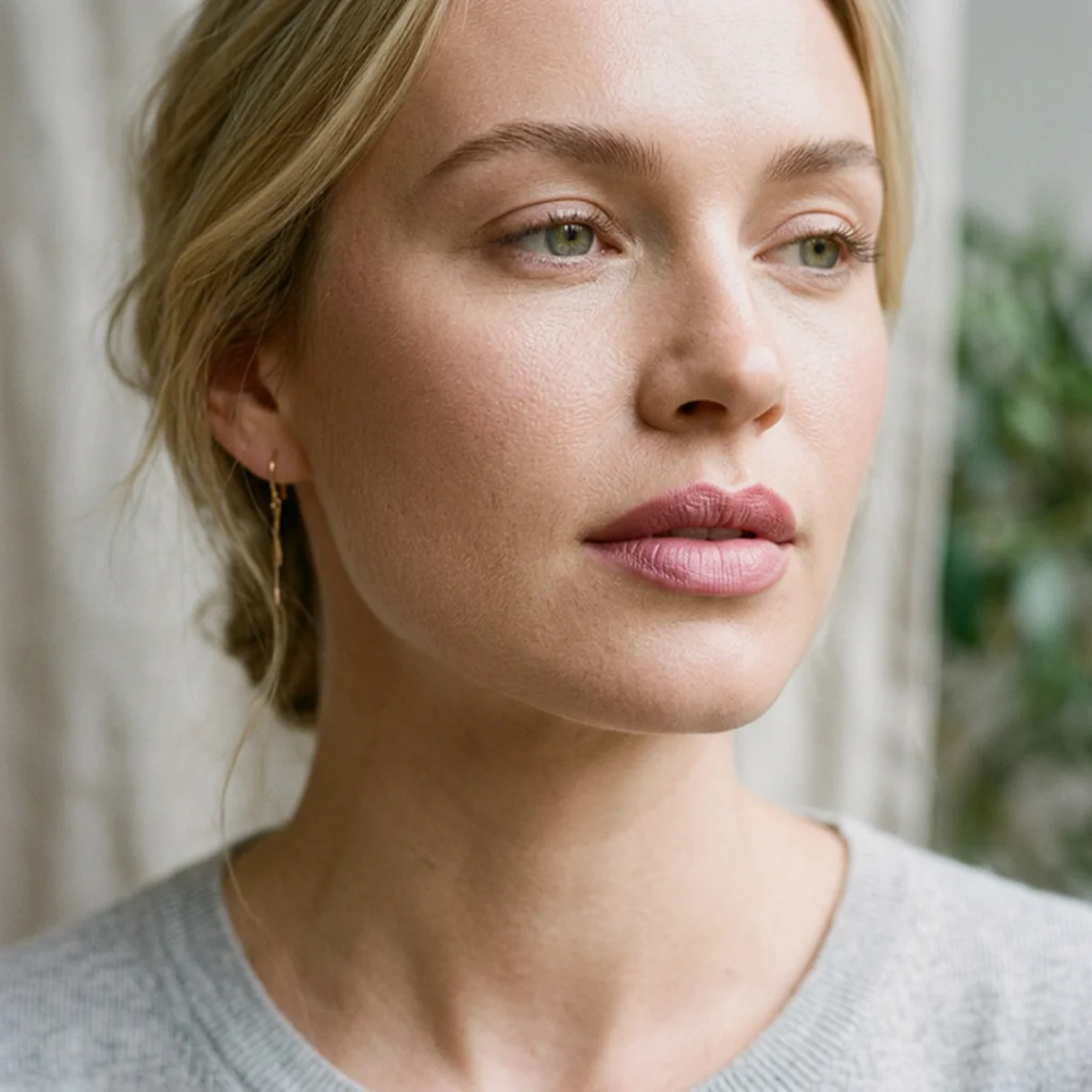
When it comes to lipstick, Soft Summer shades should enhance the natural harmony of the face rather than dominate it. Many people with Soft Summer coloring notice that bright lipsticks can feel overwhelming or disconnected from their overall look, especially when the goal is a soft, blended look.
What Makes a Lipstick “Soft Summer Friendly”
Soft Summer lip colors usually share three characteristics:
Muted saturation The color should feel slightly softened or dusted with grey rather than vivid. This is the “clarity” dimension of the broader 12-season system — Soft Summer sits on the muted end, alongside Soft Autumn, rather than the clear end where Bright Winter or Bright Spring sit.
Cool undertone Most flattering shades lean cool or neutral-cool. A warm, orange-based red introduces a temperature mismatch that’s often the first thing people notice when a shade looks “off” rather than simply “not their favorite.”
Medium depth Medium-depth shades are useful starting points for a soft look; adjust the depth to your natural lip color and desired contrast.
Temperature, clarity, and depth are the same three dimensions that decide lipstick fit across every season, not just this one — our broader breakdown of why undertone alone isn’t enough goes into why two people who are both “cool” can still need different lipstick intensities. For Soft Summer, start with muted, neutral-cool color and adjust depth and opacity on your own lips.
Lipstick Shades That Work Beautifully
Several color families consistently work well for Soft Summer.
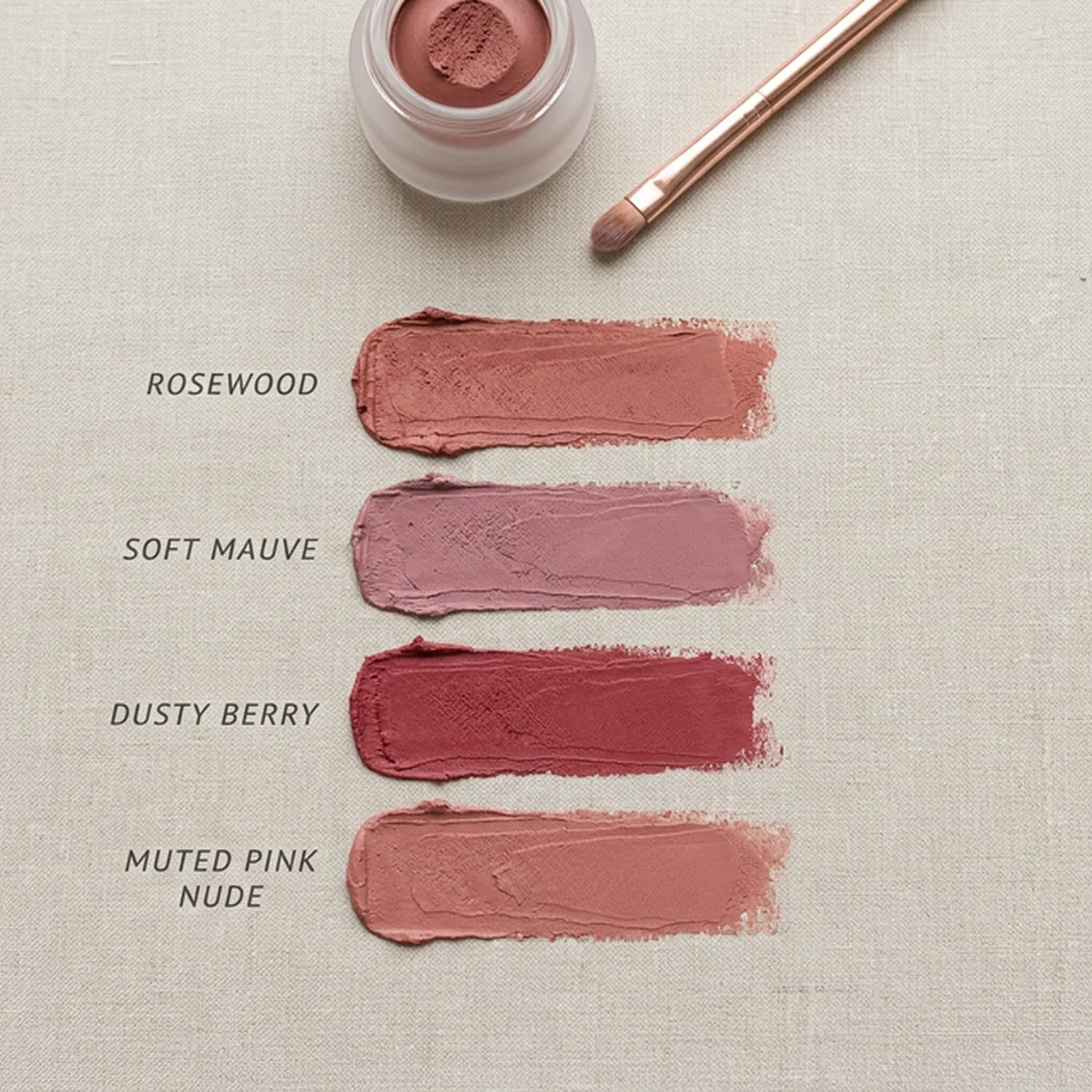
Rosewood A muted rose-brown can add definition; compare neutral-cool versions because shades named rosewood can also lean warm.
Soft Mauve A classic Soft Summer shade that enhances the lips without looking dramatic, and often the easiest first shade to try if this palette is new to you.
Dusty Berry A deeper option that still stays soft and elegant when muted, usually the shade to reach for if rosewood or mauve feel too quiet.
Muted Pink Nude Suited to everyday makeup, especially when the rest of the look is minimal.
These four aren’t the only options worth trying; they’re starting points. Lip pigment varies enough from person to person that the same “rosewood” can read slightly differently depending on your natural lip color underneath it, so testing two or three shades side by side tends to be more reliable than committing to one from a swatch chart alone.
Shades That Often Look Too Strong
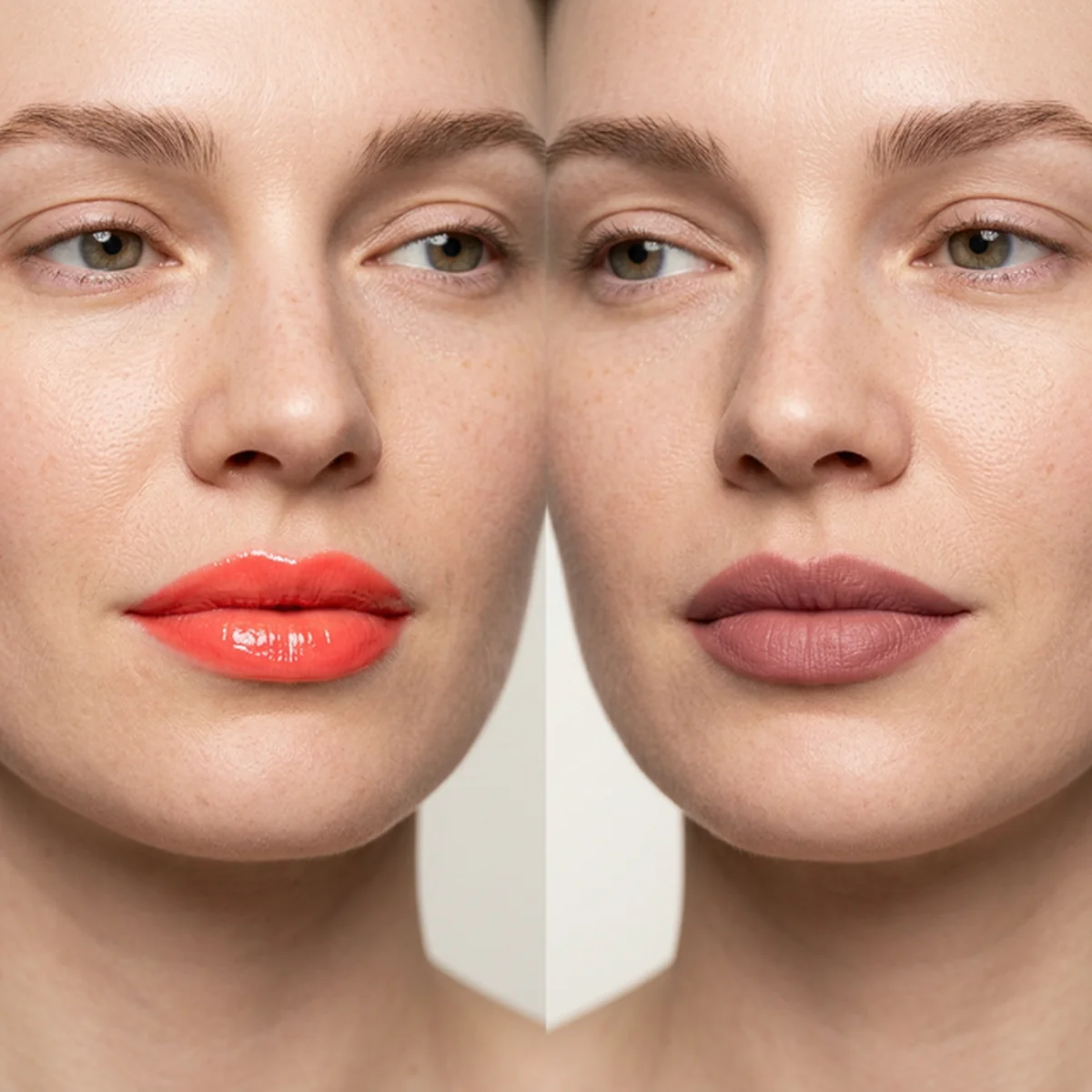
Some lip colors can easily overpower the softness of this season:
- Bright coral
- Warm orange-red
- Highly glossy neon pink
- Very dark wine tones
These shades introduce either too much warmth or too much contrast. That doesn’t make them off-limits for a single bold-lip night out, but as an everyday choice they tend to compete with Soft Summer’s natural coloring rather than complement it.
How to Choose the Right Finish
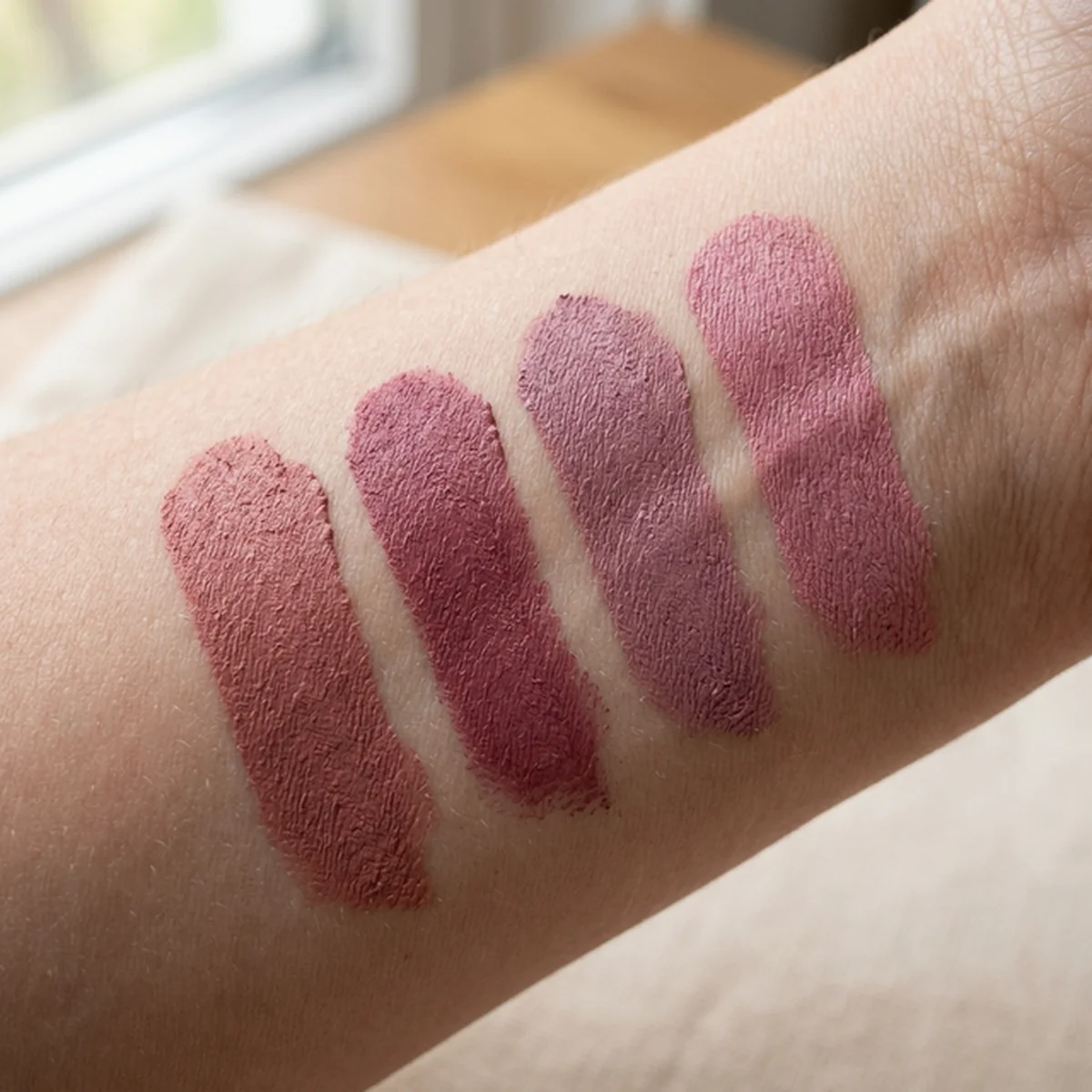
The finish of the lipstick matters almost as much as the color. For Soft Summer, the most flattering textures tend to be:
- satin finish
- soft matte
- blurred lip tints
Gloss changes reflection, while opacity controls how much natural lip color shows through; a sheer gloss can still give a softly muted result. A softly diffused finish tends to maintain the calm elegance that defines Soft Summer beauty.
Soft Summer vs. Soft Autumn and Cool Summer Lipstick
A fair question: if Soft Autumn is also muted, and Cool Summer is also cool-toned, how different can Soft Summer lipstick really be from either of them?
In practice, the difference is real but narrow. Soft Autumn shares Soft Summer’s muted clarity but leans warm rather than cool, so a Soft Autumn version of “dusty berry” pulls more toward brick or terracotta, while the Soft Summer version stays rosier. Cool Summer (True Summer) prioritizes coolness; Soft Summer prioritizes mutedness and is neutral-cool. Compare a cooler rose or berry with a softer neutral-cool version at similar depth.
If you’re genuinely unsure which of the three describes you, the breakdown of Soft Summer vs. Soft Autumn is worth reading before committing to a shade list — wearing a slightly-too-warm or slightly-too-clear lipstick is one of the more common mismatches people run into with this palette.
Common Signs a Shade Isn’t Working
A few signals tend to show up when a lipstick fights your coloring rather than working with it: the color looks like it’s floating above your lips instead of blending in, your lips pull more attention than your eyes or the rest of your face, or the shade looks fine in the mirror but reads chalky or washed out in photos. This guide to colors that wash Soft Summer out covers the wider pattern beyond lipstick, including why it happens rather than just which shades to avoid.
The Goal: Natural Harmony

Soft Summer makeup works best when nothing feels too sharp or overpowering. Instead of focusing on intensity, the goal is balance and softness.
A well-chosen lipstick should feel like a natural extension of the face: subtle, refined, and quietly elegant. When the color sits close to your natural lip tone while adding gentle definition, that’s usually a sign you’ve found the right shade.
Three Real Products to Compare
These three products are editorial comparison candidates, not firsthand-tested recommendations. The same color can look warmer, cooler, deeper, or brighter over your own lip pigment and in different light.
- rom&nd The Juicy Lasting Tint in Bare Grape: a sheer, glossy rose-grape starting point if you prefer softly diffused color.
- Dasique Souffle Color Pot in 09 Haze Rosy: a cream color to compare on lips and cheeks separately; the result may not be identical in both places.
- Maybelline Super Stay Matte Ink in 15 Lover: a more defined pink matte option to test lightly blotted against a full layer.
Explore the Soft Summer product edit to see product photographs, application notes, exact-shade sources, and retailer listings. Confirm the variant and seller, then compare swatches in daylight before buying. Our season-to-product mapping has not been independently wear-tested.
FAQ
What is the best lipstick color for Soft Summer?
Muted rose, soft mauve, and dusty berry tend to work most consistently, since they combine the cool undertone and medium depth Soft Summer coloring needs. The single best shade still depends on your natural lip pigment, so testing two or three is more reliable than picking one from a list.
Can Soft Summer wear red lipstick?
Try a muted rose-red or softened blue-red for a blended look. Bright red can be warm, cool, or neutral; its saturation and your preferred contrast matter more than the name alone.
Is matte or glossy lipstick better for Soft Summer?
Satin and soft matte are useful starting finishes, but a sheer gloss can also work. Compare the actual color and opacity on your lips rather than ruling out shine.
How is Soft Summer lipstick different from Soft Autumn lipstick?
Both are muted, but Soft Summer leans cool and Soft Autumn leans warm. For example, a Soft Summer dusty berry is rosier, while a Soft Autumn dusty berry leans toward brick or terracotta.
Why does my lipstick look different than it did on the model or swatch?
Lip pigment varies from person to person, and the formula’s opacity determines how much shows through. The same shade can read noticeably different on naturally pigmented lips versus very pale ones.
Do I need to know my exact season before choosing a lipstick?
Not strictly, but it narrows the range considerably. If you’re not sure where to start, a free color analysis samples photo colors and applies fixed rules to suggest a seasonal direction; for the shared styling method and its limits, see What Is Personal Color Analysis?.
Final Thoughts
Soft Summer lipstick isn’t about finding one correct shade. It’s about staying inside a fairly narrow band of muted, cool, medium-depth color and testing within that band until something feels like it belongs on your face rather than sitting on top of it.
If lipstick is just one piece of a bigger question, our complete guide to all 12 seasons breaks down how this same logic applies to clothing, blush, and eye color, not just lips.