season-guide
Colors That Make True Autumn Glow
Explore True Autumn colors in spice, bronze, moss, and maple, with practical choices for clothing, makeup, hair, and different fabric finishes.
Some seasons look best when their colors whisper. True Autumn isn’t one of them. True Autumn often looks fresh in colors that combine warmth with medium-to-deep richness, such as rust, bronze, and moss. Warmth, depth, and finish help create the coordinated effect often described as a glow.
This guide covers where that glow comes from, which color families deliver it, and how to tell True Autumn apart from its neighbors while you’re choosing between them.

What “Glow” Actually Means for This Season
True Autumn, also called Warm Autumn, puts warmth first, with moderately muted, medium-to-deep colors as useful starting points. It is a palette direction, not a required hair, eye, or skin color.
- Warmth: spice red, bronze, and golden brown often coordinate well together.
- Depth: moss, maple, and richer rust can add definition without requiring every item to be dark.
- Moderate saturation: earthy color usually works more easily than neon brightness.
If a color feels too pale, vivid, or cool, try a warmer version at a similar depth before replacing the whole outfit.
The Color Families That Deliver
Spice Tones
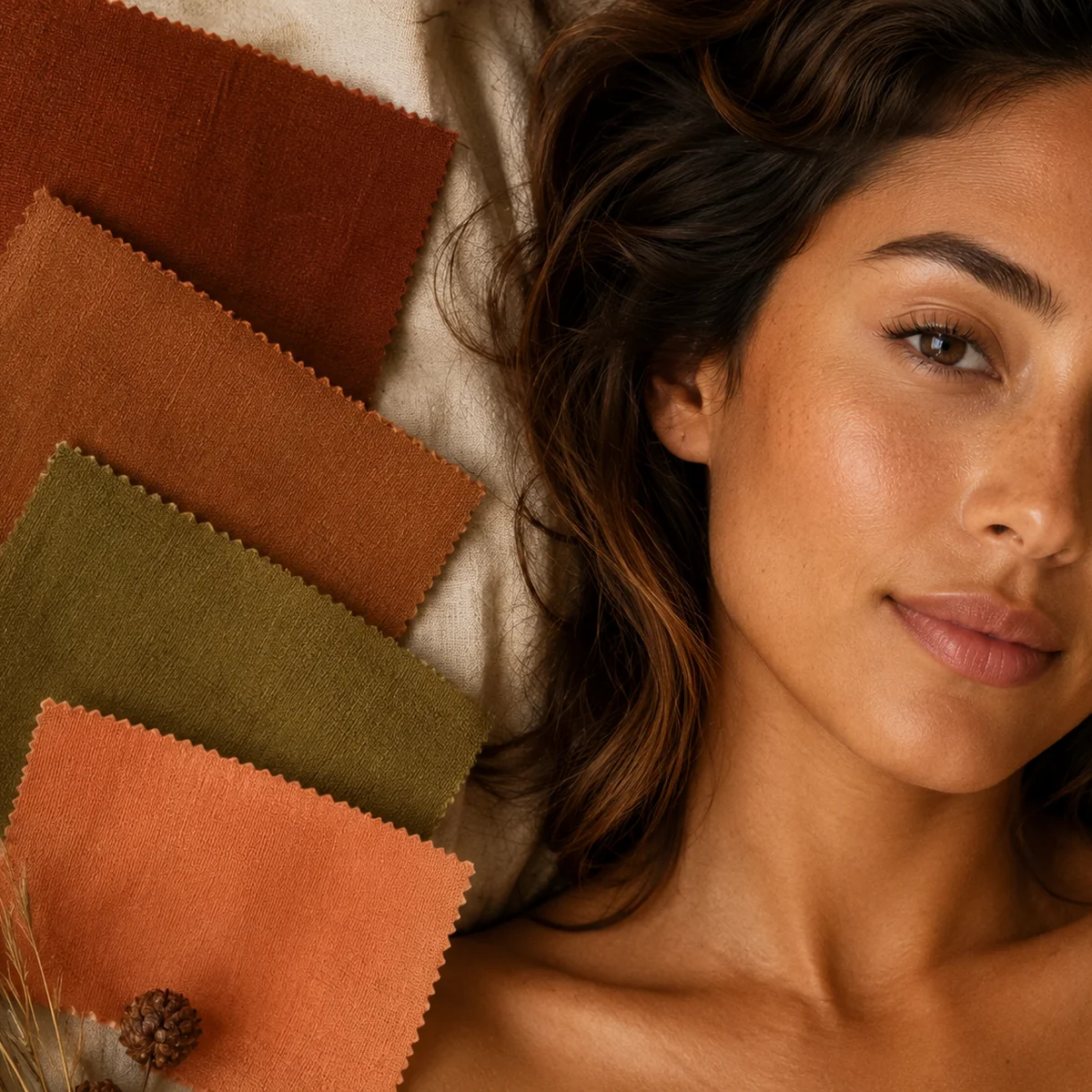
Cinnamon, paprika, brick garnet, and mulled spice combine warmth with useful depth. A spice-red lip or rust knit is a good way to bring this color family near the face.
Golden Browns and Bronze
Maple brown, camel gold, bronzed copper, and espresso olive make a warm neutral base. If a brown looks too gray or muddy, try a more golden version at a similar depth.
Forest and Moss Greens
Olive bark, olive bronze, and deep moss often complement the warm, earthy palette. Their depth makes them useful for outerwear and evening wear; the shade and finish matter more than a simple opposite-color rule.
Roasted Fruit Shades
Roasted apricot, burnished coral, and cinnamon peach offer lighter warm options. Brick-coral lips and cinnamon blush can carry the same direction into makeup; adjust the depth and opacity to your complexion.
Makeup and Hair That Complete the Glow
Color choice does most of the work, but the finishing details matter here more than in cooler seasons, because True Autumn’s glow depends on warmth showing up consistently from hair to clothes to makeup — not just in one piece of an outfit.
Warm makeup often coordinates well with this palette: a softly applied bronzer, a brick or spice-red lip, and warm-brown eyes are useful starting points. Cool-toned “your color but make it neutral” products are usually the quiet reason a True Autumn feels like their makeup “isn’t working” even when the shade name sounds right.
Hair follows the same warmth rule. Rich auburn, golden brown, and copper-warm shades extend the glow instead of interrupting it, while ash or cool-toned dye jobs — even subtle ones — can flatten the effect makeup and clothing are trying to build. If hair color is fixed or not up for debate, warm-toned makeup and clothing can still do most of the work; it’s simply easier when every layer pulls in the same direction.
What Dims True Autumn Instead
Colors to adjust when you want a warmer, softer combination:
- Cool pastels (icy pink, lavender, powder blue) — they sit on top of warm skin instead of merging with it.
- Pure black and stark white near the face can create more contrast than a warm, earthy outfit needs; warm brown or cream often gives a gentler alternative.
- Neon brightness — saturation without depth reads as noise against naturally rich coloring.
None of these are forbidden; worn away from the face they barely matter. It’s the near-face zone — collars, scarves, lips, earrings — where the difference shows.
Building a Wardrobe That Keeps the Glow Going
Use the same warm palette in different fabrics rather than buying several new statement colors.
| Fabric or finish | Colors to start with | Outfit use |
|---|---|---|
| Matte knitwear | Camel gold, maple brown, cinnamon | A warm base for a rust scarf or spice-red lip |
| Structured outerwear | Espresso olive, deep moss, golden brown | Depth over a lighter roasted-apricot or cream top |
| A satin or metallic accent | Bronzed copper, burnished coral | A small scarf, earring, or evening detail |
A matte rust knit and a shinier copper fabric reflect light differently even when both sit in a warm color family. View the actual fabric near your face and beside the clothes you plan to wear. Keep the finish that gives the amount of definition or shine you want.
True Autumn or a Neighbor? Quick Orientation
Because “autumn” covers several distinct palettes, mislabeling is common:
- More muted than rich? You may be Soft Autumn — same warmth, grayer pigments, lower tolerance for depth.
- Warm but noticeably brighter? Look toward the spring border, where colors gain clarity.
- Golden-brown with dark depth and unsure about the cool edge? The Deep Autumn comparison settles whether your depth leans warm or cold.
The photo-based personal color analysis samples colors from your photo and applies fixed rules; use its result as a starting hypothesis for choosing a palette.
FAQ
Can True Autumn wear red?
Brick, rust, and tomato-leaning reds are good starting points. If a blue-based cherry or crimson feels too cool, try a warmer red of similar depth.
What metals suit this season?
Gold, bronze, and copper often coordinate with the warm palette. Silver or white gold can be a deliberate cooler accent; finish, size, and placement affect the combination.
Does this palette work year-round or just in fall?
Year-round. Moss green, spice, and bronze are color choices, not calendar restrictions. Change fabric weight for the weather.
I’m between True Autumn and Warm Autumn — what now?
On this site they are two names for the same season. Start with the shared spice, bronze, and olive palette, then adjust depth and saturation to the specific item.
Does sun exposure change what glows on this season?
A tan can change the contrast between skin and clothing, so familiar shades may look different. It does not automatically establish a warmer season or guarantee that cool colors will look worse.
Final Thoughts
True Autumn doesn’t need permission to wear color — it needs the right kind: warm-rooted, medium-deep, quietly saturated. Build around spice, golden brown, and forest shades; these warm colors often create the coordinated effect you want without relying on a single makeup product. Warm spice, golden brown, and forest shades are useful starting points for that coordinated effect.
Keep going:
- Explore the Warm Autumn season hub for palettes and next steps
- Compare the muted border in True Autumn vs Soft Autumn
- Go deeper into the season with How to Know If You Are a True Autumn
- See the full map in All 12 Personal Color Seasons Explained Simply
New to seasonal color? Start with the 12-season guide →
Correction (Oct 2026): clarified that True Autumn and Warm Autumn are the same season and corrected the explanation of green against warm coloring.