season-guide
Colors That Make Cool Winter Glow
Sapphire, cranberry, white, and silver-gray offer useful Cool Winter options. Choose clear colors, outfit contrast, and metal accents that work together.
Most advice on dressing a cool Winter season funnels everyone toward the same instinct: go darker, go moodier, lean into black. That’s not a bad instinct for most Winters. Depth can work for this season too, but coolness is the defining emphasis.
Cool Winter, also called True Winter, emphasizes coolness within a clear Winter palette. Sapphire, blue-red, cool charcoal, and white are useful starting points; depth and brightness can vary within that cool direction.
This guide covers useful color families and ways to combine light neutrals, deeper colors, and metal accents, then explains how neighboring Winter palettes differ.

What “Glow” Means for the Coldest Season
For Cool Winter, a fresh-looking outfit often combines:
- Cool direction: cherry red, sapphire, cool violet, and cooler versions of green.
- Clarity: colors with less gray, whether you choose a pale accent or a deeper shade.
- Useful contrast: black with white, charcoal with icy pink, or a similar light-dark pairing.
The amount of contrast is a choice, not a requirement. A cool red near the face can add definition without an entirely black-and-white outfit.
The Color Families That Deliver
The Blue-Based Reds
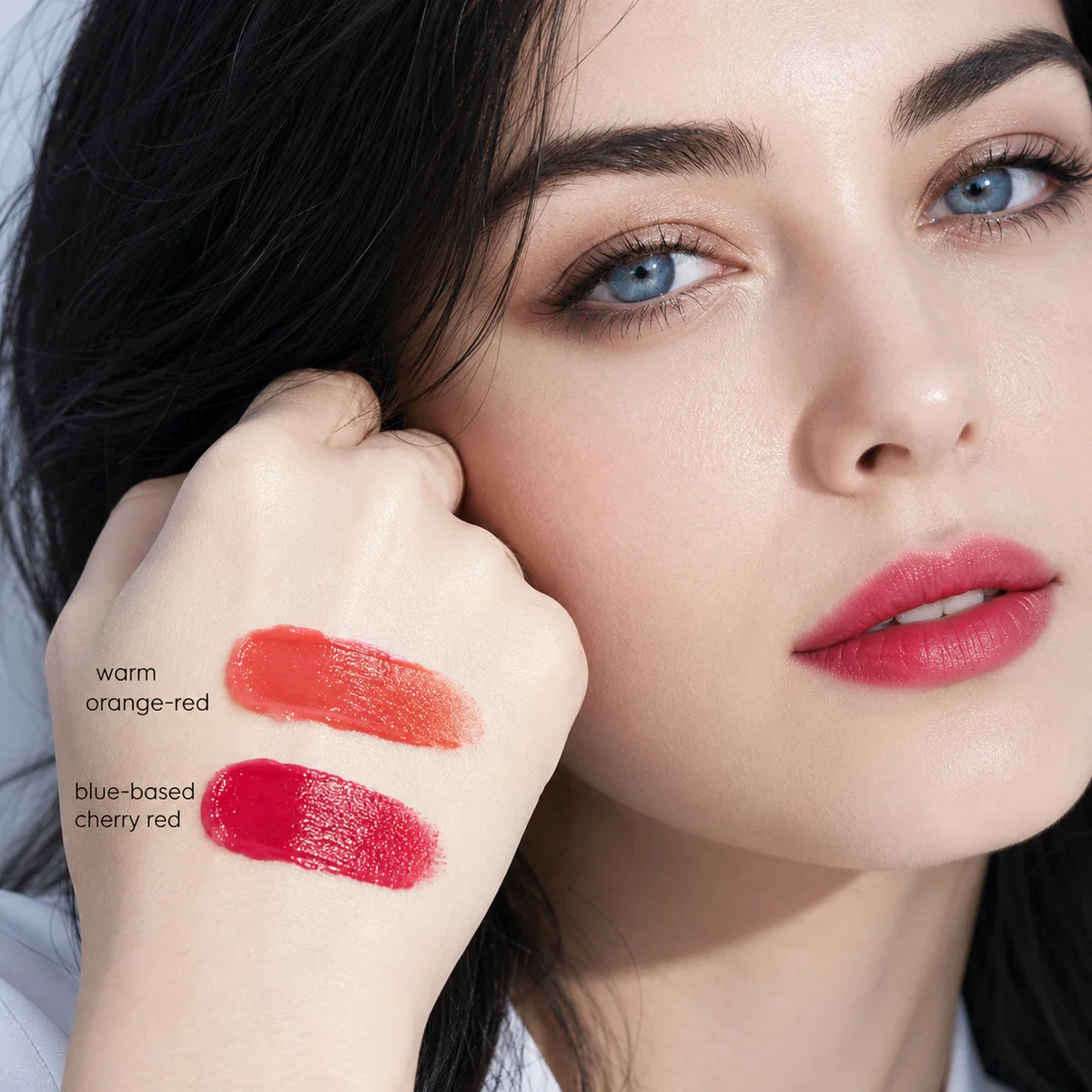
Cranberry, true red, and raspberry offer cool alternatives to orange-red. A blue-red lip or scarf often works well when you want a defined accent near the face.
The Icy Jewel Range
Sapphire blue, emerald, cool violet, winter mauve, and icy aqua give different depths within the cool range. Icy lavender is a useful lighter accent; sapphire or emerald adds more depth. Pale icy colors and deeper jewel colors are not the same in lightness or saturation.
The Stark Neutrals
Optic white, ink black, cool charcoal, and silver-gray provide a practical base. Choose the contrast you want rather than assuming the strongest combination is always best.
| If you want | Try |
|---|---|
| A crisp light neckline | Optic white with sapphire or charcoal |
| A quieter cool neutral | Silver-gray with a deeper cool shade |
| More definition in a dark outfit | An icy aqua, lavender, or cool-white accent |
Silver and Other Metals
Bright silver, platinum, and white gold often connect easily with a cool palette. Warm gold can be an accent or part of mixed-metal jewelry; compare its size, finish, and position beside the face. Choosing silver is not a reliable test of your season.
What Dims This Season Instead
The short list, for balance:
- Warm earth tones — mustard, rust, camel, olive. They belong to Autumn and pull this season toward sallow.
- Muted, dusty shades — Soft Summer’s softer colors may give less definition than the clearer versions used here.
- Cream and ivory — too yellow next to coloring that wants stark white.
None of this is an absolute ban — worn away from the face, in a bag or a pair of trousers, warm earth tones don’t fight the undertone in the same way. It’s specifically collars, scarves, lips, and earrings — the pieces sitting closest to the skin — where the difference between polished and drained shows up first.
Cool Winter or a Neighbor?
Winter’s sub-seasons overlap enough to cause real confusion:
- Deeper than bright? Compare yourself against Deep Winter — the difference is depth versus purity of coolness.
- Softer than striking? You may be across the border in Cool Summer territory, where those same hues need muting into raspberry and slate.
- Brighter than balanced? Clear/Bright Winter leans neutral-cool with maximum chroma — check the Bright Spring vs Bright Winter comparison if sparkle is your dominant trait.
The photo-based personal color analysis samples colors from your photo and applies fixed rules; treat its result as a starting hypothesis for choosing colors.
FAQ
Can Cool Winter wear black? Yes. Black is a useful dark neutral that often gives this palette definition. The only caution is head-to-toe matte black in flat lighting; break it with an icy accent or silver to keep dimension.
What about white hair or going gray? Silver-gray hair often works well with cool colors. Check whether your preferred light-dark contrast has changed rather than assuming that gray hair guarantees a better match.
Is icy pink too light to be flattering? No. Icy pink can be a useful light accent. Frosty pinks work because they’re clear, not because they’re pale. Milky baby pink fails where icy orchid succeeds.
Do lips need to be dark? No. Cool berry and fuchsia lips read as natural flush on this season. What to skip is warm nude — it reads as beige and mutes the whole face.
Final Thoughts
Cool Winter offers strong options in sapphire, cranberry, cool charcoal, optic white, and silver-gray. Choose a light-dark combination that gives you the definition you want, then use silver, white gold, or a small mixed-metal accent to connect the outfit.
Keep exploring:
- Browse the Cool Winter palette guides on the season hubs
- Understand contrast from the other side in Why Warm Colors Don’t Suit True Winter
- See how black behaves across seasons in Why Black Doesn’t Look Good on Everyone
- Map the whole system in All 12 Personal Color Seasons Explained Simply